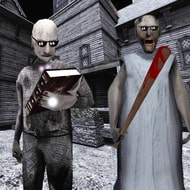
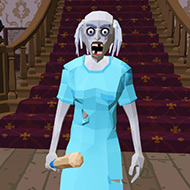
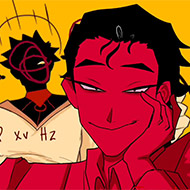
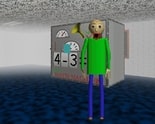
You start Anomalous Coffee Machine standing in front of a vending machine that clearly wasn’t built by any normal company, with a girl named Horu leaning against it like she’s been waiting for exactly you. There’s no tutorial popup, no objective list, no health bar in sight — just a text box under the machine’s screen and Horu’s flat instruction to type in whatever word comes to mind. You haven’t pressed a single key yet and the machine is already humming like it’s deciding what to do with you. Nothing on screen explains what a “good” word looks like, or whether Horu or you are the one who ends up drinking whatever comes out of the slot. The only certainty is that the cup is empty, the word history is blank, and everything past this point is entirely on you.
The Machine Horu Insists Isn’t Really Hers
The premise of Anomalous Coffee Machine is simple to say and strange to sit with: this is a vending machine that can dispense any liquid a player can name, ordinary or not. Ask for coffee and you get coffee. Ask for something that shouldn’t have a liquid form at all and the machine tries anyway, with consequences that show up on Horu’s face, body, or dialogue box a second later. Players and outside write-ups have compared the setup to SCP-294, a well-known fictional wish-granting vending machine from the SCP Foundation universe, and the comparison holds — the object grants requests nobody quite asked for and never explains why it works.
Horu herself treats the machine less like a possession and more like a roommate she’s stuck supervising. She doesn’t gatekeep what you type, and she doesn’t warn you before a word goes somewhere dark. That hands-off attitude is what gives the opening minutes their unease — you’re not being guided through content, you’re left alone with a device reacting to language nobody bothered to document.
There’s no map, no inventory screen, and no currency to manage. The entire interface is the machine, the cup, and Horu’s reaction, built around curiosity instead of systems — which is exactly why some players fall for the first ten minutes and others feel like they’ve seen it all by the twenty-minute mark.
Typing Words Into a Machine That Talks Back
The core loop never really changes: type a word, brew it, decide who drinks it, watch what happens. Some words produce a throwaway line and nothing else. Others trigger a visible transformation on Horu, a new piece of cup art, or a shift in how she talks to you for the rest of the session. Because outcomes aren’t labeled in advance, the only way to learn the machine’s logic is to keep feeding it words and paying attention to what sticks.
None of this gets explained upfront. You just find it out by typing.
Word recognition is where the machine gets genuinely inconsistent, and it’s a frustration players bring up often enough that it’s worth flagging directly. Plural and singular forms of the same word don’t always behave the same way — “games” registers as a valid input while “video games” does not, for example, even though both read as the same idea to a human. New players tend to assume a rejected word means the concept isn’t in the game at all, when really it just means the phrasing was wrong. That’s the single biggest early mistake: giving up on an idea instead of rephrasing it.
Dialogue also repeats. There’s roughly 100,000 words of writing backing the reactions, but any individual player hits the same lines again once they’ve typed a few hundred words, especially around common categories like food or animals. It doesn’t ruin the loop, though it does make the machine feel more novel on the first sitting than on the fifth.
Phoenix Forms, Zombie Loops, and the Combos Anomalous Coffee Machine Rewards
Single words only get a player so far. The more interesting content sits behind combinations that players have mapped out and shared across guides and community word lists. Feed the machine “immortal” and then “fire” and you land on a Phoenix form. Pair “immortal” with “death,” brewed twice, and Horu drifts toward a Zombie form instead. “Angel” and “devil” together produce a kind of balanced, dual state rather than pushing her fully toward either extreme, and dragon-themed words layer on top of each other to produce different dragon variants depending on which elemental word came first.
Repetition is its own mechanic, not just a side effect of typing the same thing twice by accident. Certain words are built to escalate the more times you brew them:
- Growth or “big” needs to be drunk twice before the change fully sets in
- Water takes three repeated brews to push past its first-stage reaction
- Coffee itself has a second-tier reaction if you order it again after the first cup
- Life keeps producing new, harder-to-predict outcomes the more times it’s repeated
One interaction players point to as proof the machine has real internal logic, not just random flavor text, is the rock-and-paper sequence: order a rock coffee and Horu takes on a stony form, follow it immediately with a paper coffee and that same form gets destroyed. It’s a small, dark joke buried in the word list, and the kind of detail you only notice by actually experimenting instead of skimming a checklist.
Reading the Color-Coded Word List Without Losing the Plot
Because the machine gives no in-game hint system, the community built its own. Player-made spreadsheets and word-list guides use a color code that’s become shared vocabulary around Anomalous Coffee Machine discussions: blue marks a secret word that never appears in any official keyword hint, yellow marks a word acting as a transformative component inside a larger combo, and green marks something still undiscovered by whoever’s maintaining the sheet. Browse the game’s comment threads and you’ll see people referencing “blue words” and “yellow combos” like it’s standard terminology, because by now it basically is.
There’s no wrong entry point. There’s just very different mileage depending on which one you picked.
That external tooling changes how different players approach the machine. Completionists treat the word list like a checklist and won’t stop until every marked cell turns green. Casual players ignore the spreadsheets entirely and poke at the text box for ten or fifteen minutes, happy to stumble into whatever comes up naturally. There’s also a modding crowd — the game ships with support for custom words and transformations, so part of the audience spends more time building new entries than exploring the base list itself.
None of these approaches is the “right” way to play. But they do produce very different opinions about the game, because a completionist grinding toward 600-plus logged transformations has a fundamentally different experience than someone who typed “coffee,” laughed once, and closed the tab.
What Beginners Get Wrong Playing Anomalous Coffee Machine
The single biggest miscalibration new players bring to Anomalous Coffee Machine is expecting a goal. There isn’t a win screen, a score, or a final boss word waiting at the end of the list. The stated aim, as close as the game gets to one, is simply finding as many of the roughly 700-plus discoverable words as possible and seeing what they do — and if you go in looking for a traditional finish line, the open-ended structure reads as aimless rather than relaxing.
The second mistake is quitting once the obvious nouns stop producing anything new. Most players start with animals, food, and basic elements, and those categories genuinely run dry fast. What isn’t obvious from the interface is that abstract concepts, emotions, and multi-word combinations are where the more elaborate transformations live, and none of that is hinted at unless you go looking for community-made lists.
Third: don’t assume a rejected word is a dead end. Because of the plural and phrasing quirks mentioned earlier, a word that gets no reaction on the first try might work fine in a slightly different form — a mistake reviewers have specifically called out as tripping up players who understood exactly what the machine wanted from them.
The Repetition Argument Every Review Circles Back To
It’s worth being honest about the split in how this game gets talked about, because it is genuinely divisive. One camp describes it as closer to an interactive art gallery than a traditional game — something you drop into for the novelty of the writing and the cup designs, not for mechanical depth. That framing shows up repeatedly in write-ups, and it’s a fair one; there isn’t much of a skill curve here.
The other camp finds the loop tedious once the surprise wears off. The common complaint isn’t the premise but the repetition — dialogue lines recur well before a player has exhausted the word list, and at least one reviewer flagged the asking price as steep relative to how fresh that content stays on a second or third sitting.
Neither side is wrong. They just wanted different things going in.
Both reactions are talking about the same core design choice. A machine with no fail state and no scoring is either liberating or hollow depending on what you walked in wanting, and Anomalous Coffee Machine never really tries to convince the second group otherwise.
Frequently Asked Questions
How many words does Anomalous Coffee Machine have?
The game is built around roughly 700-plus discoverable words feeding into more than 600 distinct transformations, backed by around 100,000 words of dialogue. That’s large enough that most players rely on community-maintained word lists rather than brute-forcing every combination alone.
How do you unlock the Phoenix form in Anomalous Coffee Machine?
Type “immortal,” brew it, then follow it with “fire.” That combination pushes Horu toward the Phoenix form rather than a plain fire reaction on its own. It’s one of the better-documented combos in player word lists specifically because the two words individually do something else entirely, so the pairing isn’t something you’d stumble into by accident.
How many times do you have to repeat a word in Anomalous Coffee Machine?
It depends on the word. Growth and “big” need two brews before the transformation locks in, water takes three repeated brews, coffee has a noticeably different second-tier reaction, and life keeps generating new outcomes the more times it’s repeated. There’s no on-screen counter for any of this, so tracking repeats is entirely on the player.
Is there an ending or a win condition in Anomalous Coffee Machine?
No. There’s no fail state, score, or final scene that closes out the game — the closest thing to a goal is working through as much of the word and transformation list as you’re willing to chase. That open-endedness is exactly the detail reviewers split on, since it reads as either relaxing or aimless depending on what a player expected going in.
Anomalous Coffee Machine doesn’t end so much as it runs out of words you’re willing to try, and that’s really the whole shape of the thing — Horu is still standing behind the counter whether you’ve logged twelve results or chased down a Phoenix form and everything past it, ready to react to whatever gets typed into the box next.