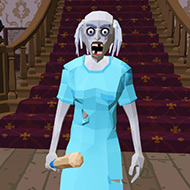
Mad Granny looks like just another reskin of the mobile granny-horror wave that took over app stores a few years back, but plays like a much tighter stealth-and-search game where a single glance out the wrong window ends the run. The premise is small and personal rather than sprawling: your father has left your younger brother in the care of a stepmother who is, by every account in the game’s own framing, not right in the head, and a distressing message from him is what pulls you into her house in the first place.
A Brother in a Cage and a Stepmother Who Isn’t Right
The setup is deliberately simple. Your brother has been placed under the stepmother’s watch, something goes wrong, and he manages to send a message asking for help before he ends up locked inside a cage somewhere in the house. From that point on, the entire game is one infiltration: get in, find him, get out, without ever letting the stepmother realize you’re there.
There’s no cast beyond that. No named side characters, no larger conspiracy — just a house, a captive brother, and a woman established as dangerously unstable rather than supernatural. That restraint keeps Mad Granny’s opening tense instead of overloaded.
What the setup lacks in lore it makes up for in pacing. The stepmother is established as a threat before you’ve opened the first door, so every room from the first minute onward carries the possibility that she’s in it.
How Mad Granny Tracks You Through the House
Detection is binary and unforgiving. Line of sight is what matters: if the stepmother’s model sees yours, the run ends immediately, with none of the gradual suspicion meters that some stealth games use to soften the moment of failure. That single rule is what the game’s own promotional copy leans on hardest, warning players in plain terms that being spotted means being dead.
That harshness changes how you move. Rather than sprinting between rooms, most of a session in Mad Granny is spent creeping along walls, peeking around corners, and timing movement to whatever patrol pattern the stepmother is on that particular run. It rewards patience over speed, which catches players expecting a faster chase-style horror game off guard early on.
Headphones aren’t just a suggestion here — the audio design is built around footsteps and ambient house noise as your main early-warning system, and playing without sound removes a real layer of tension. A smaller group of players treats that audio-first design as the actual appeal, playing with the lights off specifically to feel the detection system the way it was built to be felt.
The Search-and-Lock Loop
Underneath the stealth, Mad Granny is structured like a room-by-room escape puzzle. You search furniture and containers for usable objects, carry them between rooms, and use them to open locks or bypass obstacles standing between you and your brother’s cage. Progress is gated by these small object puzzles rather than by combat or direct confrontation of any kind.
Some of these puzzles lean on numeric codes hidden elsewhere in the house, and this is one of the few points where player feedback consistently agrees on a weak spot: a number of reviewers specifically mention getting stuck hunting for a code with no clear hint pointing toward where it’s hidden. It’s the kind of friction that turns a five-minute stealth session into a much longer, more frustrating one.
None of the puzzles require anything the game hasn’t already shown you, which is a small but real design courtesy — there’s no item combination system to fight with, just search, carry, and use. Short-session mobile players lean on exactly that simplicity, since a full attempt at reaching the cage fits into a five-to-ten-minute break rather than demanding a longer sitting.
Easy, Normal, and Hard in Mad Granny
Difficulty is chosen up front rather than adjusted on the fly, and the three settings change more than just how often the stepmother patrols near you.
- Easy trims down patrol frequency and gives more room for a wrong turn without immediately ending the session, making it the setting most reviewers recommend for a first attempt at the house layout.
- Normal is closer to the intended pace: patrols are tighter, mistakes cost more time, and the search-and-lock loop demands more attention to sound cues.
- Hard removes most of the margin for error entirely, and is the setting players who specifically wanted “tough but rewarding” difficulty gravitate toward once they already know the house.
Switching difficulty mid-run isn’t possible, so many first-time players treat an Easy attempt as a scouting mission for the house layout before taking Hard seriously. Because a full run only takes a few minutes even on the harder settings, replaying at a higher difficulty after finishing once is a normal part of how people engage with the game rather than a niche completionist habit.
Getting Caught, and What Respawning Actually Costs You
Death isn’t necessarily final. Mad Granny includes a respawn option rather than forcing a hard restart every time the stepmother catches you, which softens the otherwise harsh one-look-and-you’re-dead detection rule. Even so, a noticeable chunk of player feedback pushes back on exactly how that system is tuned, with requests for something closer to a multiple-lives structure instead of the current setup.
That tension — instant death paired with a forgiving-but-not-generous respawn — is probably the single most debated design choice in the whole game. Some players treat it as fair, since it keeps runs short and stakes real; others find it punishing enough to bounce off entirely before reaching the brother’s cage even once.
Learning the stepmother’s patrol habits through repeated failure is effectively part of the intended loop, whether or not that was the original plan.
The Granny Comparison Nobody Avoids
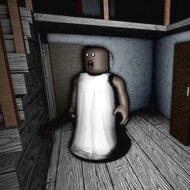
It’s impossible to talk about Mad Granny honestly without addressing the elephant in the room: a meaningful number of players and reviewers describe it as visually and structurally close enough to the far more famous Granny franchise that some call it derivative outright. The cage, the house, the elderly antagonist, and the stealth-avoidance loop echo that bigger series closely, even if the stepmother story itself is original to this release.
That doesn’t automatically make it worse — plenty of players who left the comparison in reviews still rated the play experience positively, and the Google Play listing sits at a 4.2-star average across close to 300 reviews and more than ten thousand installs. But it’s a real, recurring criticism rather than a fringe complaint.
What tends to separate people’s opinions is less the concept and more the execution: the search-and-lock puzzle structure and the three-tier difficulty system give it a slightly different rhythm, even when the surface presentation invites the same comparison over and over.
Where Players Get Stuck
Beyond hunting for codes, most early frustration comes from misreading the stepmother’s patrol timing rather than from the puzzles themselves. New players tend to move on instinct rather than on sound, which in a detection system this strict is close to a guaranteed early death.
The other common beginner mistake is treating object pickups as optional exploration rather than mandatory progress. Nothing forces a return trip through an already-searched room, so it’s easy to miss an item and spend several minutes backtracking once a locked door won’t budge.
Neither mistake is fatal in the long run, but both explain why first sessions run longer and rougher than the store page’s “a few minutes per session” framing suggests.
Questions Players Ask About Mad Granny
- Is Mad Granny the same game as the Granny franchise? No. It shares an obvious visual and thematic resemblance — an elderly antagonist, a house you’re trapped in, a cage — and that resemblance is exactly why some reviewers call it derivative, but the stepmother, the captive brother, and the specific story are original to this release rather than borrowed content.
- What happens if the stepmother catches you in Mad Granny? Getting spotted ends the run immediately, with no partial-detection warning stage beforehand. The game does include a respawn option rather than forcing you all the way back to the very beginning, though a portion of the player base has openly asked for a more generous version of that system.
- Which difficulty should a first-time player pick in Mad Granny? Easy is the setting most reviewers point new players toward, since it loosens patrol frequency enough to learn the house layout and object locations without the instant-death rule punishing every small mistake while you’re still getting oriented.
Mad Granny isn’t reinventing the genre it borrows its silhouette from, and enough players have said so directly that pretending otherwise would be dishonest. What it has going for it is a puzzle-driven search-and-lock loop layered under that familiar stealth shell, a three-tier difficulty system that changes how the stepmother behaves, and a runtime short enough that trying it costs a few minutes rather than an evening. Whether that’s enough to outrun the comparisons is something every player who opens that cage decides for themselves.