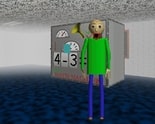
You watch Ms. Applegate push Nugget and Lily through the Romeo and Juliet death scene one more time, and this time the cup he drinks from isn’t a prop. He’d gotten distracted kissing Lily’s forehead mid-performance, missed his cue, and swallowed the real thing instead of the fake poison the play calls for. That single moment sets the tone Kindergarten 3 keeps chasing for the rest of the day — a school where the danger is constant, the adults are useless or actively making it worse, and every side quest doubles as a small emergency.
Kindergarten 3 Moves the Story to Wednesday
The first two games covered Monday and Tuesday, so Kindergarten 3 picks up on Wednesday, with the kids shipped off to yet another new school. Green goo is seeping out of corners across the building, the principal and several other students have gone missing, and the new principal turns out to be the former janitor stepping up into a job nobody really prepared him for. The school’s teacher, Ms. Lovelett, communicates almost entirely through rhyming songs, which makes even basic instructions feel like riddles.
Kid, the same silent, player-controlled protagonist from the first two games, spends the day investigating what’s actually happening at the school while helping out a returning and new cast. A mysterious girl with memory loss from the events of Monday and Tuesday wanders the halls, and the school nurse — well-practiced by this point in treating goo poisoning specifically — treats casualties as they pile up over the course of the day.
The day is split across a handful of locations: the school yard, a classroom with its own small performance stage, the library, the nurse’s office, and the playground, with a gator named Linda occupying the school pond as a constant background presence. Objectives across the day range wildly in tone, which is very on-brand for the series.
- Helping stage and perform Ms. Applegate’s chosen play for the day.
- Sneaking through the school’s air ducts to reach areas that aren’t normally accessible.
- Dealing with Linda the gator, one way or another.
- Breaking a window as part of a specific objective sequence.
- General day-to-day survival tasks that don’t fit neatly into any one category.
Series veterans piecing together how Wednesday connects to the Monday and Tuesday timelines tend to get more out of the opening stretch than newcomers, who are mostly just trying to figure out why there’s goo everywhere before anything else makes sense. The game tracks 21 separate Steam achievements across all of this, which gives a rough sense of how much optional side content is packed into a single school day.
Ms. Applegate’s Romeo and Juliet Problem
Ms. Applegate technically teaches kindergarten, but her taste in classroom theater runs toward material like King Lear, and she leans hard into the more morbid scenes rather than softening anything for her students. The Romeo and Juliet death scene is the clearest example — she pushes Lily and Nugget to act out the mutual poisoning and stabbing as literally as possible, which is exactly how Nugget ends up drinking real poison instead of the prop drink the scene calls for.
Curing him means working the school’s systems rather than rushing to the nurse. The fix runs through the library: ask Ms. Lovelett whether there’s an antidote, and she responds with a riddle that changes randomly each time you ask. From there, Monty — a kid whose arms barely work and who trades favors for money — needs to be talked into handing over a dollar. That dollar buys a specific soda from the school vending machine, chosen based on whatever Ms. Lovelett’s riddle pointed to, and giving that soda to Nugget finishes the fix.
It’s a small, self-contained puzzle chain, but it says a lot about how Kindergarten 3 structures its problem-solving: nothing is a straight line, and almost every fix routes through at least one character who isn’t going to make it easy. The randomized riddle also means the exact sequence isn’t identical run to run, which keeps the puzzle from becoming pure memorization on a replay.
None of this stops the tone from swinging even darker later on. Nugget ends up accidentally killing Ms. Applegate with an axe during the same play, and the game barely slows down to acknowledge it — he’s not particularly bothered, and neither is the story. That kind of tonal whiplash, casual violence played completely straight, is exactly the dark comedy the Kindergarten series has built its reputation on, and it’s one of the more divisive things about the writing even among longtime fans who otherwise love it.
The Nugget Cave and the Gator Named Linda
A good chunk of the day’s main plot has Kid teaming up with Nugget and Lily to dig what’s referred to as the Nugget Cave underneath the school, working toward rescuing Kevin. Kevin is the former principal’s son, and he’s developed an intense attachment to Linda, the gator in the school pond, insisting she’s the school’s actual mascot and reacting badly to anyone who treats her as a threat instead.
That protectiveness runs directly into the new principal’s plans. At one point the janitor-turned-principal recruits Austin to deal with Linda directly, which escalates into a separate conflict entirely — players can nudge Davey into calling Austin out over it, and the two end up fighting each other rather than the gator becoming the actual obstacle in that stretch of the story. It’s a good example of how side characters in Kindergarten 3 tend to generate their own small plotlines instead of just standing around as scenery.
Players who enjoy tracking down every side interaction tend to spend real time on Kevin, Austin, and Davey’s overlapping drama, while players focused purely on finishing the main rescue objective can plow through the gator subplot with a fraction of the dialogue seen. Both approaches get you to the same rescue eventually, but the amount of the school’s Wednesday you actually witness along the way differs a lot depending on which type of player you are.
Fifty Monstermon Plushies and the Extinction Event
Kindergarten 3 changes how the long-running Monstermon collectible line works. Earlier games built Monstermon around a battle-card minigame; this entry drops the card battles entirely and replaces them with fifty collectible Monstermon Plushies scattered and hidden across the school. Some are tied to specific character interactions — handing a chicken nugget to the character Nugget nets you the plushie literally named after him — while others, like one called Hard Boogar, show up through more mundane environmental interactions like checking classroom desks. The plushies are also grouped into color-coded sets, generally referred to by players as Purple and Blue.
Collecting all fifty unlocks a secret ending and the achievement titled Extinction Event, continuing a tradition from the first two games where a full Monstermon set gates bonus content most players won’t stumble into on a normal playthrough. For series veterans, there’s an extra payoff buried in this collectible thread specifically: following the Monstermon storyline across all three games eventually reveals that Nugget is secretly a cult leader, a twist that only makes sense in hindsight once you’ve been paying attention to that thread since the first game.
Whether the fifty-plushie system is actually a fair trade for the battle-card minigame it replaced is one of the more debated points in the community. It’s an easy system to explain, but it drops the interactive layer the earlier games had, leaving Monstermon fans with pure collection instead of anything resembling a game within the game.
What Kindergarten 3 Changes From the First Two Days
Compared to Kindergarten 2 in particular, several systems got trimmed rather than expanded. The Monstermon battle-card minigame is gone outright, replaced by the plushie collection described above, and some players in the community have been vocal that this is a real loss rather than a lateral change — it wasn’t the centerpiece of the earlier games, but its presence added a layer of side content that the plushie hunt doesn’t really replicate.
The bigger structural shift is how linear the day feels. The first two entries leaned heavily on branching choices with real consequences tied to them, and Kindergarten 3 pulls back from that in favor of a more fixed sequence of events. One community review put it bluntly, saying the game lacked the same spark as the first two entries specifically because it played more like a single path than a puzzle box of consequences. The puzzle design itself still gets consistent praise — several of the individual puzzle chains, like the antidote sequence for Nugget’s poisoning, are considered some of the strongest in the series — but the final stretch of the game in particular has been singled out as noticeably easier than everything leading up to it.
None of that has stopped the game from landing well overall. It’s a shorter, tighter Wednesday than the sprawling Monday and Tuesday that came before it, and for players who want the dark comedy and puzzle-solving without the full weight of tracking every branching consequence, that trade-off reads as a reasonable one rather than a downgrade.
Kindergarten 3 never lets Wednesday feel safe, whether that’s Ms. Applegate handing out real poison during a school play or Linda watching from the pond while Kevin insists she’s harmless. The goo, the rhyming teacher, and the fifty Monstermon Plushies scattered through the halls are all part of the same joke — that kindergarten was never going to be a normal place to survive, no matter how many times these kids get sent to yet another new school.