Pepper the Giant Purple Dog looks like a rerun from a pastel kids’ channel about a lovable, oversized pet, but it plays like a chore simulator with the floor cut out from under it. The demo opens with a framing device straight out of found-footage horror: a VHS tape, presented as recovered lost media from a pet-sim supposedly finished decades ago and quietly never released. That framing does a lot of work before a single chore icon appears, because it tells you this “wholesome” pet game was buried for a reason.
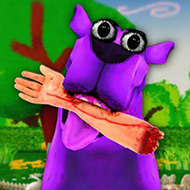
The setting is Normalville, a town whose entire personality boils down to “nothing bad ever happens here,” delivered with the stiff, cheerful sincerity horror games only use when they plan to break it. Neighbors greet the player like background extras from a children’s show, and the low-poly, slightly warped look of the town reads less like nostalgia and more like a home movie left somewhere it shouldn’t have been for twenty years. Pepper himself is an ordinary pet dog who simply happens to be several times too large for the house he lives in, and the opening stretch lets that scale feel almost cozy before it stops.
Nobody in Normalville tells you outright that Pepper is dangerous. The game just hands you a leash, a food bowl, and a dog that keeps getting hungrier, and lets the player connect the dots on their own schedule.
Feeding, Bathing, Walking: The Chores That Come With Pepper
The core loop is built around tasks any virtual-pet fan will recognize instantly, stretched over a horror frame instead of a cute one. Players run errands around Normalville to earn coins, then spend those coins keeping Pepper fed and cared for. The demo keeps this stage light on puzzles and heavy on completing objectives, which lets the town’s quiet wrongness sit in the background instead of competing with a mechanical challenge for attention.
- Feeding Pepper, which starts as a straightforward errand and becomes the entire plot once dog food stops being available to buy
- Bathing him, one of the more mundane chores that plays almost like a beat of comic relief before things escalate
- Walking him through the woods behind the houses, where the game’s exploration sequences live
- Collecting coins scattered around town, both for chores and for hidden extras the demo doesn’t fully explain
Players who go in expecting a straightforward walking sim tend to be the ones most caught off guard, because the chore loop is genuinely competent as a chore loop before it turns on you. A lot of the early unease is delivered through background detail rather than jump scares, which rewards anyone willing to slow down and actually look at Normalville instead of beelining for the next chore marker.
None of the tasks are mechanically difficult — there’s no fail state hiding in the bathing or walking segments. The tension comes from knowing, on some level, where the loop is heading.
When the Dog Food Runs Out
The turn happens the moment dog food is no longer purchasable and Pepper is still hungry. This is where Pepper the Giant Purple Dog stops being a pastiche of a cozy pet sim and becomes something closer to a moral trap: the game pushes the player toward killing neighbors and feeding them to Pepper instead, dressed in cartoon-murder framing rather than realistic gore.
It’s a blunt pivot, and it’s meant to be. The demo doesn’t soften the tonal whiplash between “walk the dog” and “the dog needs a body,” and that abruptness is exactly what generates the discomfort players talk about afterward.
What makes this land is that Pepper never becomes a cartoon monster in the traditional mascot-horror sense — he’s still a giant purple dog, still recognizably the same character from the opening chores. The horror comes from what the player is asked to do for him, not from a design that suddenly makes him look scary.
Pacifist Runs, Kill Routes, and the Endings of Pepper the Giant Purple Dog
Once the food runs out, the demo branches. Players can hold a pacifist line and refuse to feed Pepper what he’s asking for, or give in and follow the dog’s escalating demands, and the game tracks which path was taken toward its ending. It’s presented plainly enough that players talk about “the pacifist route” versus “the compliant route” the way they’d discuss a visual-novel branch.
- The mercy path, where the player refuses to hunt neighbors and manages Pepper’s hunger through the town’s remaining legitimate options
- The compliant path, where the player gives Pepper what he wants and the demo’s darker cartoon-murder content plays out in full
- A secrets-driven path tied to the coins and backend details scattered through Normalville, which the demo hints at without spelling out
The existence of a secrets-and-coins layer sitting underneath the two obvious moral routes is part of why the demo’s reception leans as positive as it does. Completionists who backtrack through Normalville chasing every coin are the ones most likely to notice that third layer, since the game never flags it with an objective marker the way it does the pacifist and compliant routes.
None of the three routes are locked behind difficulty — the branching is about the choices a player is willing to make, not their skill. That’s a big part of why the demo reads more like a short interactive story than a traditional survival-horror test.
Why Fans Want the Full Release to Make Pepper Chase Longer
The most consistent piece of feedback around the demo isn’t about the premise — it’s about pacing. The scariest single moment in the current build is a jumpscare near the very end, and more than one player has said, in one form or another, that the demo peaks too early and ends before the dread has room to build into anything sustained.
That criticism comes with a specific request attached: players want Pepper to actually chase them through more of the full release, rather than have the threat mostly implied through chores and a single late scare. It’s a reasonable ask given how strong the setup is — Normalville’s fake wholesomeness and the hunger mechanic both create tension the demo doesn’t fully spend before the credits roll.
Speedrunning-minded players who blitz through the roughly twenty-minute demo tend to hit this complaint hardest, since compressing an already short experience makes the late jumpscare feel like the whole show. Players who slow down for the errands and the town’s small details generally come away with a more evenly built sense of dread instead.
The Retro Look and the Atmosphere Reviewers Keep Praising
Where the demo consistently earns praise is atmosphere. The retro-leaning 3D aesthetic, the VHS framing, and the deliberately “off” version of a wholesome pet-sim setting all get singled out as the demo’s strongest asset, independent of the jumpscare pacing complaints. Reviewers describe the tone as heavy and oppressive well before anything overtly horrific happens.
Demo reception backs this up: on Steam, it sits at roughly 89% positive across its user reviews, a strong number for a title built almost entirely around a single tonal reversal.
Mascot-horror fans specifically — the crowd that already tracks games built around corrupted children’s-media aesthetics — tend to be the most vocal defenders of the demo’s restraint. A lot of that wider subgenre leans on constant jump scares, which makes Normalville’s slower build stand out by comparison.
Questions Players Ask About Pepper the Giant Purple Dog
Is Pepper the Giant Purple Dog actually scary, or is it more unsettling than frightening?
Most of the demo runs on dread rather than scares — the fake-wholesome town, the stiff neighbors, and the hunger mechanic build unease slowly. The one big jump scare comes late, which is also the demo’s most common criticism: players want that tension stretched over more of the full release rather than concentrated at the finish.
Do you have to kill your neighbors to finish the demo?
No. Once Pepper’s dog food runs out, the game offers a pacifist route where the player refuses to hunt neighbors and manages the hunger mechanic through legitimate means instead. Giving in and feeding Pepper what he’s actually asking for is a separate, darker branch, and the demo tracks which choice you made toward its ending.
How long is the current Pepper the Giant Purple Dog demo, and is the full game different?
The demo runs roughly twenty minutes for a single route, though multiple endings and a hidden secrets layer built around collectible coins give it real replay value beyond that. The full version is planned to expand well past the demo’s single chore loop and VHS-framed introduction.
What makes Pepper the Giant Purple Dog work, even in its current unfinished form, is how patiently it earns its one big turn — the town of Normalville, the dog food bowl, and a chore list that never once tells you what you’re actually feeding Pepper until it’s too late to look away.