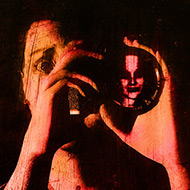
You drag the brightness slider up on a photo of Eli’s living room and stop cold. There’s a shape in the doorway that has no business being there, half-swallowed by shadow, standing where the family cat’s bed used to sit. Eli swears he never noticed it when he first showed you the picture. That’s the moment Shutter Story stops feeling like a favor for a friend and starts feeling like something you shouldn’t have agreed to.
The premise is simple to explain, harder to sit with once you’re doing it. Eli thinks his family home is haunted, hands you a stack of old photographs and home videos, and you go through them looking for proof. There’s no combat, no chase, no health bar. The dread comes from staring at a still image until it stops looking still.
Eli’s House and the SpectralAwareв„ў 2.1 Software
Everything you do runs through a piece of in-game software called SpectralAwareв„ў 2.1, presented as consumer-grade analysis tools bolted onto an old desktop interface. You’re not a paranormal investigator with special equipment. You’re a friend who happens to be decent at photo editing, which is exactly why Eli came to you instead of calling someone official.
The desktop itself is dressed in an early-2000s operating system look, all glossy icons and Frutiger Aero shine, the kind of interface that feels warm and familiar before you’ve even opened your first photo. That nostalgia is doing real work, lulling you into a comfortable rhythm of clicking through folders and adjusting sliders, which makes the first genuinely wrong image land harder.
Players who grew up on that exact era of computer design have been the loudest about this detail. You trust the interface because it looks like something you used as a kid, and the game spends that trust deliberately.
How Shutter Story Turns Family Photos Into Evidence
The core loop is photo and video analysis. You open an image, then push exposure, contrast, and noise around, layer in filters, and watch for anything that shouldn’t be in frame. Video clips add another wrinkle, since the anomaly might only appear for a couple of frames while the footage plays, which means you’re rewinding and scrubbing instead of just staring at a static picture.
Once you spot something, you don’t just move on. You have to sort it into the right category, which is where the game quietly turns into a deduction exercise instead of a straight hidden-object hunt. Guess wrong on a classification and the case you’re building against the house gets shakier, not stronger.
It’s a slower rhythm than most horror games ask for, and that’s clearly intentional. The full release is promised to include more than 80 haunting photos and video clips, with the demo alone offering 19 of them across roughly forty-five minutes, so the scale of material you’re meant to pick apart is genuinely large rather than a handful of gotcha images.
Apparitions, Simulacra, and the Categories You Learn to Read
Shutter Story sorts its hauntings into named categories, and learning to tell them apart is half the game. The ones confirmed so far cover a real spread of horror imagery rather than just repeating the same ghost shape over and over.
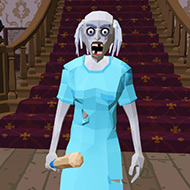
- Apparitions: figures or faces that show up somewhere they clearly shouldn’t be in the frame.
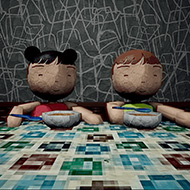
- Simulacra: patterns and shapes that only resolve into something horrifying once you look at them the right way.
- Strange Lights: unexplained light sources or glows that don’t match the rest of the photo’s lighting.
- Demonic Entities: the more overtly monstrous findings, saved for the images that go furthest past ordinary haunting imagery.
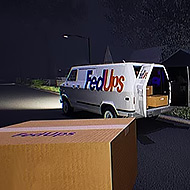
Then there’s a category that reviewers have singled out as the game’s best idea: impossible events, findings that aren’t spooky so much as reality-breaking, like a car photographed mid-exit through a building window that was never open. It’s the kind of image that makes you question the haunting angle entirely and start wondering what actually happened in that house.
Misfiling a finding isn’t just a wrong click either. Players chasing full marks on a case treat the categories like a checklist to get exactly right, while lore-focused players care less about precision and more about which category a given photo even belongs in, since that alone hints at how bad things get later in the house.
Sliders, Filters, and the Night Vision Trick
The moment-to-moment feel of Shutter Story comes down to a handful of tools you’ll use constantly: brightness and contrast sliders, a noise filter, and a night vision mode that strips a photo down to almost nothing so anything hiding in the dark has nowhere left to go.
Night vision is where the actual scares live. Dial the brightness down and flip that mode on, and a doorway that looked empty a second ago can suddenly have an outline standing in it. It’s a scare delivered through image manipulation rather than a loud noise or a chase, and it’s the mechanic players bring up most when describing why the demo got under their skin.
Horror fans drawn to slow dread over sudden violence tend to click with this immediately. Players who enjoy puzzle-style deduction get their own hook from the categorization side, treating each photo like a small case file rather than a scare delivery system.
Walking Through the House Between Photos
The desk isn’t the whole game. Between analysis sessions, Shutter Story drops you into first-person exploration of the family home, letting you walk rooms you’ve already seen through a dozen unsettling photographs.
Recognizing a hallway from a picture you just picked apart, then physically walking down it, is a different kind of unease than anything the desk software produces. You’re not hunting for anomalies anymore. You’re just present in a space you already have reasons to distrust.
These segments also carry weight for the story, since choices made while walking the house feed into a structure built around multiple endings rather than one fixed outcome. The demo only gives a taste of this, but enough to signal the photo desk and the house are meant to inform each other.
The Impossible Events That Break the Rules
What separates Shutter Story from a straightforward hidden-object horror game is how it uses the impossible events category to widen the story instead of just adding scares. A car driving out of a window that was never open isn’t frightening in the traditional sense. It’s confusing, and the confusion is the point.
The haunting Eli asks you to investigate turns out to be layered across multiple generations of his family, the photographs acting as fragments of a much older history rather than isolated incidents. Piecing that together is the actual reward for the slider work, not one big reveal at the end.
Because only a demo exists right now, discussion around Shutter Story is still mostly about the desk-versus-house balance. The forty-five minutes lean heavily on photo analysis, exploration kept comparatively brief, and that’s the point players raise when they talk about wanting more of the house in the finished game.
What Players Keep Talking About
Feedback on the demo has skewed strongly toward people with a photography background, who describe it as capturing the eeriness of paranormal investigation through finite photo and video evidence rather than open-ended ghost hunting.
Comments repeatedly mention just enjoying the act of messing with the filters, independent of whether a given photo even hides anything. That’s a small detail, but it points at why the interface matters so much: the software itself is fun to poke at, which keeps the slower stretches from dragging.
Reactions to the scares have been consistently positive too, players describing the ghosts and atmosphere as genuinely frightening despite the total absence of anything chasing you. For a game built around sitting still and looking closely, that’s not a small achievement.
Questions Players Ask About Shutter Story
- Is Boo Men the same game as Shutter Story? No. Boo Men is a separate co-op horror game where a crew of players sneaks into a house to steal from ghosts while staying in the light, with its own set of named ghost enemies and multiplayer heist structure. It shares no story, characters, or developer with Shutter Story, and the overlap in some listings is simply an aggregator mixing up two unrelated horror titles.
- How many photos are in the Shutter Story demo? The playable demo includes 19 photos and video clips to analyze across roughly forty-five minutes of content, while the full game is planned to include more than 80 haunting photos and clips in total.
- What does the SpectralAwareв„ў 2.1 software actually let you do? It’s the in-game analysis tool you use on every photo and video, letting you adjust exposure, contrast, and noise, apply filters, and switch on a night vision mode to expose anomalies hidden in dark or low-detail areas of an image.
- Is Shutter Story mostly jump scares or a slower burn? It leans heavily toward slow-burn dread. There’s no chase or combat, and most of the tension comes from spotting something wrong in a photo you already thought you’d finished examining, with night vision producing the sharpest scares.
- What are the paranormal categories you sort findings into? Confirmed categories include Apparitions, Simulacra, Strange Lights, Demonic Entities, and a standout impossible events category covering findings that defy physics rather than just looking ghostly.
Whatever the finished version ends up including beyond the demo, Shutter Story already knows exactly what it’s good at: making you distrust a photograph of a living room because Eli’s family has been quietly haunted across more generations than either of you first realized.