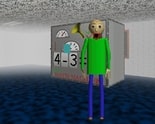
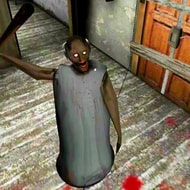
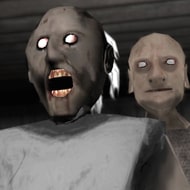
How many notebooks can you actually grab before Baldi decides you’re not worth teaching anymore and starts sprinting after you with a ruler? That question is the whole game, and Baldi’s Basics Classic Remastered answers it with a rebuilt version of the schoolhouse that made this question famous in the first place, running on a newer engine with sharper AI, cleaner art, and a few extra ways to play the same nightmare.
What Baldi’s Basics Classic Remastered Actually Rebuilds
The original Baldi’s Basics in Education and Learning was a jam-scale project that turned an ugly, deliberately janky edutainment parody into one of the most talked-about indie horror games of its era. Baldi’s Basics Classic Remastered takes that same map and that same core loop and reconstructs it inside the more advanced framework built for Baldi’s Basics Plus, which means better performance, more consistent art direction, and AI that reacts to you with less randomness and more genuine pattern.
The pitch from the people behind it is “three games in one,” and that’s not just marketing filler — the remaster ships with three distinct styles layered over the same schoolhouse, each changing the rules just enough to feel like a different challenge rather than a reskin.
None of this changes the basic premise. You’re a student sent to collect seven notebooks scattered through a schoolhouse while Baldi, the math teacher who is absolutely not okay with wrong answers, roams the halls waiting for you to slip up.
Classic Style, Party Style, and Demo Style
Each of the three modes targets a different kind of player. Classic Style is the faithful recreation of the 2018 original — same notebook placements, same pacing, same sense of dread the first time you hear Baldi’s footsteps speed up. Party Style is built around Baldi’s Basics Birthday Bash, which takes all the items in the schoolhouse and shuffles them around, so memorizing item locations from the classic layout stops helping you.
Demo Style is the one aimed at Baldi’s Basics Plus fans specifically — it mixes several of the mechanics and elements introduced in Plus into the familiar classic map, giving you a taste of that game’s systems without leaving the smaller, more contained schoolhouse behind.
- Classic Style — the original 2018 layout and rules, rebuilt on the newer engine.
- Party Style — Birthday Bash rules, with item locations shuffled each time.
- Demo Style — classic map with Baldi’s Basics Plus mechanics layered in.
Collecting All Seven Notebooks
The win condition hasn’t changed: find all seven notebooks hidden in classrooms around the schoolhouse. Each notebook contains three arithmetic problems presented as simple riddles, and answering them correctly is what actually completes that notebook rather than just picking it up.
The detail almost everyone brings up when they talk about this mechanic is the second notebook. Its third question is intentionally unsolvable — there’s no correct answer to give — so getting it wrong is mandatory, not a mistake. That forced wrong answer is what officially kicks off the survival-horror half of the game, since every incorrect answer feeds directly into how aggressive Baldi becomes.
Newer players almost always misread this moment as their own fault, assuming they mis-clicked or missed an obvious answer, when it’s actually a scripted turning point built into the design. Once you know that going in, the whole first notebook run feels less like a test you can fail and more like a countdown you’re setting off on purpose.
Reading the Schoolhouse’s Other Residents
Baldi isn’t the only NPC roaming the halls. Playtime pulls you into a jump-rope minigame whenever she catches you, burning valuable time you’d rather spend finding notebooks. Gotta Sweep patrols specific hallways with a broom and pushes you back the way you came if you cross his path. It’s a Bully will shake you down for an item if you’re carrying one he wants, and 1st Prize, a science-fair project turned wandering hazard, causes its own separate headaches.
Arts and Crafters deserves special mention because of how his behavior actually changes over the course of a run. He starts out mostly harmless, but once you’re carrying enough notebooks to make him jealous, looking directly at him for more than a second makes him charge you. Players who don’t know this rule tend to get blindsided by it on their first jealous-Arts-and-Crafters encounter, since nothing earlier in the game teaches you to avoid eye contact with a sock puppet.
Then there’s Principal of the Thing, whose detention mechanic got a specific tuning pass in this remaster: his detention time increments were reduced to five-second steps in most cases, with a jump straight to ninety-nine seconds as the outlier punishment, and outside of Hard Mode he no longer automatically knows exactly where you are right after scolding you. Both changes make getting caught by rule violations feel less like a death sentence than it did in the original.
Items That Keep You Alive in the Schoolhouse
Survival in Baldi’s Basics Classic Remastered leans heavily on a handful of items you’ll find scattered around, especially in the cafeteria behind the yellow doors.
- BSoda — sprays anything in your line of sight backward until it hits a wall, Baldi included, making it the closest thing to a panic button the schoolhouse gives you.
- Zesty Bars — grant temporary infinite stamina, and once the effect wears off your stamina resets to whatever it was before you drank it, so timing when you use one matters more than just chugging it the moment you find it.
- Scissors and other classroom items — useful for specific obstacles you’ll run into while exploring, though they’re situational compared to BSoda and Zesty Bars.
Blue doors marked with a “99” lead into classrooms where notebooks and problems are waiting; yellow doors mark the cafeteria, which is usually your best bet for restocking BSoda and Zesty Bars before pushing further into the map.
Hard Mode, Mirror Mode, and Lights Out
Beyond the three core styles, Baldi’s Basics Classic Remastered layers in modifiers that change the run without changing the map itself. Mirror Mode simply flips the entire schoolhouse horizontally, which sounds minor until your muscle memory for turns and shortcuts stops working correctly. Lights Out drops the whole building into near-total darkness except for a small ambient glow around your own character and the light coming off Principal of the Thing, which turns basic navigation into its own source of tension.
Hard Mode is the one that actually rewrites NPC behavior rather than just the atmosphere. On Hard Mode, Arts and Crafters loses the spinning wind-up animation before teleporting that gives you a warning cue on normal difficulty, and Gotta Sweep’s sweeping attack becomes noticeably harder to escape than the easier version most players get used to on Classic Style.
Combining modifiers is where a lot of the replay value lives — Hard Mode Lights Out in Party Style, for instance, strips away both your visual warning cues and your memorized item locations at the same time, which is a completely different kind of stressful than a first run through vanilla Classic Style.
Chasing High Scores in Endless Mode
All three styles can also be played in Endless Mode, which drops the fixed win condition entirely and just asks how many notebooks you can collect in a row before Baldi finally catches you. There’s no story beat waiting at notebook seven here — it’s pure survival, and it’s where the arcade-style, score-chasing side of the game comes out most clearly.
Endless Mode is also where the difference between Classic, Party, and Demo Style stacks the most, since a shuffled Party Style map or a Plus-infused Demo Style map means every run genuinely plays differently, rather than you just re-running the same memorized route for a better time.
Players chasing leaderboard-style bragging rights tend to gravitate here specifically because a completed Classic Style run has a hard ceiling, while an Endless Mode run only ends when you make a mistake — or Baldi simply outlasts you.
What Changed Between the 2018 Original and Baldi’s Basics Classic Remastered
Beyond the three-styles structure, the remaster carries a long list of smaller adjustments that longtime players notice immediately. Baldi and Principal of the Thing both received re-recorded voice clips, which is one of the first things returning players comment on, since the audio cues are such a core part of reading danger in this game.
On top of the detention and Arts and Crafters changes already mentioned, the overall feel of movement and detection is noticeably smoother than the original, a direct result of being rebuilt inside the Baldi’s Basics Plus framework rather than the original’s rougher toolset. Accessibility improvements were also part of the stated goals for this rebuild, making the game more approachable without stripping out what made the original tense in the first place.
It’s worth being upfront that opinions split a little here: some longtime fans prefer the rougher, jankier feel of the 2018 build precisely because that jank was part of the charm, while others see the remaster’s sharper AI and cleaner presentation as a straightforward improvement. Steam user reviews sit at Very Positive overall, with roughly 93% of total reviews positive, which suggests the remaster’s changes have landed well with most of the audience even if they’re not universally preferred over the original.
Answers to Common Baldi’s Basics Classic Remastered Questions
- What’s the actual difference between Baldi’s Basics Classic Remastered and the original 2018 game? The core notebook-collecting loop is the same, but the remaster runs on the Baldi’s Basics Plus engine, with re-recorded voice lines, a faster and friendlier detention timer from Principal of the Thing, a telegraphed spin animation before Arts and Crafters teleports, and an easier escape from Gotta Sweep’s sweeping attack outside of Hard Mode.
- Can you play without ever finishing the notebooks, just to see how long you survive? Yes — Endless Mode is available in Classic, Party, and Demo Style, and it drops the seven-notebook win condition entirely in favor of collecting as many notebooks as possible before Baldi catches you, which is the closest thing this game has to a pure high-score chase.
- What’s actually different between Classic Style, Party Style, and Demo Style? Classic Style faithfully rebuilds the original 2018 layout and rules, Party Style applies the Birthday Bash ruleset and shuffles item locations around the map so memorization stops working, and Demo Style keeps the familiar classic map but mixes in mechanics pulled from Baldi’s Basics Plus.
Whether you’re speedrunning Classic Style for a clean seven-notebook clear, hunting a personal best in Endless Mode, or just seeing how long you last against Arts and Crafters on Hard Mode, Baldi’s Basics Classic Remastered is still fundamentally the same trap it always was: a math class that gets more dangerous every time you get an answer wrong.