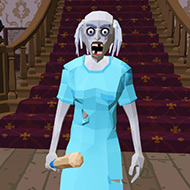
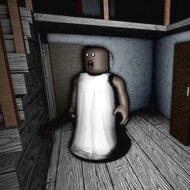
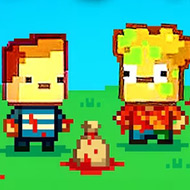
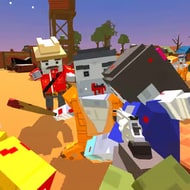
In Granny Multiplayer, you don’t escape the house alone anymore, which matters because half of the tension in the original game came from having no one to warn you before a mistake became fatal. Also known among players as the Cursed House Multiplayer Mod, this version keeps Granny’s house exactly as dangerous as it always was — it just gives you company while you try to get out of it.
The Same House, Now With Backup
Granny Multiplayer is built specifically to add cooperative play to Granny’s original house without changing the core gameplay that made the format work in the first place. Granny still hears everything — a dropped item or a creaking floorboard still pulls her toward whoever made the noise — and the fundamental loop of searching for keys and tools to open the main door is untouched. What changes is that the search is now split between multiple players instead of carried entirely by one.
Bear traps remain scattered through the house as a physical hazard, and Granny’s pets are still lurking in the dark corners of the property, adding danger beyond Granny herself — none of it toned down or simplified just because a second player is now sharing the risk. Hiding spots like wardrobes and coffins are still available, but coordinating who hides where — and making sure Granny doesn’t see you slip into one — becomes a shared responsibility rather than a solo judgment call.
Cooperating Without Getting Each Other Caught
The core appeal of Granny Multiplayer is coordination: players join forces to solve puzzles, avoid Granny’s attacks, and explore the house together, which sounds safer than doing it alone but introduces its own risk. Two players moving carelessly generate twice the noise, and a teammate panicking in the wrong room can pull Granny toward a location a more careful player was trying to avoid entirely, undoing several minutes of careful progress in a single rushed decision.
That tension between cooperation and shared risk is what separates Granny Multiplayer from simply playing the original game twice in parallel. Success depends on actual communication about who’s searching where, which items have already been found, and which hiding spots are still safe to use — the kind of coordination that has no equivalent in the solo version of the house, where every decision only ever affected one player.
Because both players are exposed to the same house-wide detection system, a run’s outcome in Granny Multiplayer often comes down to whichever player is currently in the more exposed position, rather than either player’s individual skill alone. Watching a teammate freeze near a hallway Granny is approaching creates a specific kind of tension solo play never has to account for — the decision to help, wait, or retreat belongs to a second person, not just to the player currently at risk.
Assuming a Partner Makes It Automatically Safer
New players tend to assume that having a partner automatically makes escaping safer, splitting up immediately without agreeing on which rooms each person will search. Since Granny reacts to noise regardless of which player makes it, uncoordinated searching often means one player’s mistake ends the run for both.
Is Granny Multiplayer Available Across All Platforms?
It’s available on Android, iOS, and Windows, with cross-play supported between Android and iOS specifically — Windows players are not part of that same cross-play pool.
- Does adding a second player change how Granny behaves? No — Granny’s core detection and pursuit mechanics stay the same; what changes is how the search for keys and tools is divided between players.
- Are bear traps and pets still part of the house? Yes, both remain as hazards alongside Granny herself, unchanged from the base game.
- Can players hide together? Wardrobes and coffins remain valid hiding spots, though coordinating who uses which one becomes a shared decision rather than an individual one.
Why Players Seek This Version Out
Granny Multiplayer draws a specific kind of player: people who already know the original house well enough to want a new way to experience its tension rather than a different location entirely. Discussion around the mod tends to focus on how much communication actually matters — pairs who treat it like a race to grab items individually tend to fare worse than those who explicitly divide the house between them before starting.
The cross-play support between Android and iOS also comes up frequently in player discussion, since it lets friends on different phone platforms play together even though Windows remains a separate pool for matchmaking purposes.
Because the mod keeps the original house layout intact, players who already know where specific keys tend to spawn bring that knowledge into a co-op run, which shifts a lot of early conversation between teammates toward efficiently splitting up known search areas rather than exploring blind. That familiarity is part of why Granny Multiplayer tends to attract returning players rather than newcomers meeting the house for the first time.
Getting Two People Out of One House
What makes Granny Multiplayer worth returning to after finishing the solo game is how differently the same house plays once another person’s mistakes can cost you as much as your own. Bear traps, pets, and Granny’s sound-based hunting haven’t changed, but the calculus around every hallway and every hiding spot has, simply because there are now two sets of footsteps for Granny to react to instead of one. Players who treat the run as a genuinely shared task — dividing the house, communicating discoveries, and timing their movements around each other — tend to get far more out of Granny Multiplayer than those who just happen to be playing the same map at the same time.