Five Nights at Freddy’s 3 looks like a haunted house attraction, but it plays like a systems-management puzzle where letting one system fail is what actually gets you killed. The setting is Fazbear’s Fright: The Horror Attraction, a theme-park-style horror ride built specifically to cash in on the legend of the original Freddy Fazbear’s Pizza, and that framing device does a lot of quiet work: everything unsettling in the building is technically supposed to be there, which makes it much harder to tell a scripted scare from a real one.
Fazbear’s Fright and the Attraction That Wasn’t Fake Enough
The night-guard job in Five Nights at Freddy’s 3 puts the player inside an attraction built around old rumors and salvaged parts from the original restaurant’s disasters. The animatronics on display are meant to be props, dressed up to look unsettling for paying customers during the day. At night, with no customers around, the line between “prop” and “threat” collapses almost immediately.
What makes Fazbear’s Fright distinct from the earlier restaurant settings in the series is that it’s already a haunted house by design before anything actually goes wrong. The building leans into rumors and half-true horror stories as its marketing, which means the game doesn’t need much additional setup to justify why everything already feels wrong on night one.
Springtrap: The One Threat That Can Actually End Your Night
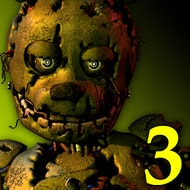
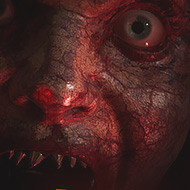
Of everything moving through the vents and hallways, only one animatronic is a genuine threat to the player: Springtrap, a suit fused with the remains of the man responsible for the original restaurant’s tragedies. Springtrap doesn’t behave like the roaming animatronics from earlier games in the series; he has to be tracked through the camera system and actively steered away from the office using audio cues placed throughout the vent network, luring him toward sound rather than being avoided by hiding.
That audio-lure system is the actual core mechanic of the game, and it inverts the usual survival-horror instinct to stay quiet. In Five Nights at Freddy’s 3, silence doesn’t protect you from Springtrap — the wrong silence just means he has nothing pulling him away from your office.
Phantoms: Threats That Can’t Kill You, But Will Ruin Your Night Anyway
Alongside Springtrap, the game fills the building with phantom animatronics — hallucinatory versions of familiar characters that appear suddenly and cause a jump scare, but can’t end the game on their own. Phantom Freddy causes an audio system error when he appears near the office. Phantom Chica is tied to ventilation errors. Phantom Foxy delivers a startling scare through the hallway camera. Phantom Puppet, sometimes called Phantom Marionette, causes static across the entire camera system when triggered.
The trick with the phantoms is that they aren’t lethal by themselves, but the systems they interfere with absolutely matter. A ventilation error left unaddressed builds toward a state where hallucinations increase and system stability drops, which in turn makes it harder to track Springtrap accurately — so the phantoms function as an indirect threat multiplier rather than a direct kill mechanic.
Managing Three Failing Systems at Once
A night in Five Nights at Freddy’s 3 comes down to juggling the camera system, the audio-lure system, and the ventilation system simultaneously, all of which can degrade if ignored. Rebooting a failed system takes time the player doesn’t always have to spare, which is where most of the tension in a given night actually comes from — not a single scripted threat, but the accumulating cost of three separate systems all demanding attention at once.
Skipping the Audio Lure System
New players tend to treat the audio lure system as optional, falling back on the “watch the cameras and hope” approach that works in earlier games in the series. Because Springtrap specifically responds to sound cues rather than simply wandering on a fixed pattern, ignoring the lure system is one of the most commonly discussed reasons a first night ends badly.
The core experience spans five nights of escalating difficulty, with a sixth night unlocked after completion for players who want the mechanics pushed further, alongside a harder Nightmare mode for players chasing the full completion experience. That structure — five standard nights plus additional harder content afterward — has become one of the more consistent expectations series veterans bring into this specific entry.
What Players Talk About Most
Community discussion around Five Nights at Freddy’s 3 leans heavily into the reveal of what Springtrap actually is, and how the Fazbear’s Fright setting recontextualizes props and lore from earlier games as literal salvage. The audio-lure mechanic also gets brought up often as a meaningful departure from the door-and-camera loop the earlier games relied on, since it asks players to actively manipulate Springtrap’s path instead of just reacting to it.
The phantom animatronics are a frequent topic as well, particularly the debate over how much they should be prioritized versus ignored — since they can’t kill directly, some players treat them as a distraction from managing Springtrap and the ventilation system properly.
How Many Systems Do You Actually Manage?
Three: the camera network, the audio-lure system used to redirect Springtrap, and the ventilation system, which can fail and needs to be rebooted before its effects compound.
Can the Phantoms Actually Kill You?
No — the phantom animatronics deliver a scare and interfere with specific systems, but they cannot end the game directly the way Springtrap can.
Is There Content After the Main Five Nights?
Yes, a sixth night and a Nightmare mode are available after finishing the core five nights, aimed at players looking for a harder version of the same mechanics.
- Springtrap: the sole lethal threat, tracked via cameras and redirected using audio cues.
- Phantom Freddy: triggers audio system errors when encountered near the office.
- Phantom Chica: tied to ventilation system errors.
- Phantom Foxy: causes a sudden scare through the hallway-facing camera.
- Phantom Puppet: causes camera static across the whole monitoring system.
Closing the Attraction for the Night
Early nights in Five Nights at Freddy’s 3 are forgiving enough that new players can lean on the camera system alone, but by the time night five arrives, all three systems are demanding attention in overlapping windows, and Springtrap’s movement through the vents stops feeling predictable. That escalation is deliberate — the game spends its first few nights teaching the audio-lure system almost gently before expecting the player to use it under real pressure.
What keeps Five Nights at Freddy’s 3 distinct from the restaurant-set games around it is how much of its horror comes from a building that was already designed to unsettle people before anything supernatural happened inside it. Springtrap’s presence, the phantom hallucinations chipping away at your systems, and the audio-lure mechanic that asks you to actively steer danger rather than hide from it all come together around Fazbear’s Fright’s core joke: the scariest thing in the attraction turned out not to be a prop after all. Anyone who’s learned to read a ventilation error before it costs them their night carries that same instinct straight into whatever survival-horror title they open next.