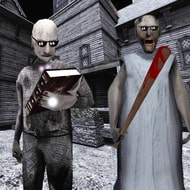
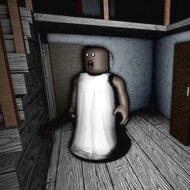
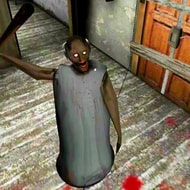
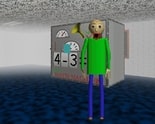
Granny 3: Enhanced looks like an escape but plays like a hostage situation with two captors instead of one. The house is gone, replaced by a deserted school, and for the first time in the series, Slendrina isn’t just present in the background — she can actively hunt and hurt the player right alongside Granny herself.
A School Instead of a House
Trading the familiar house for a deserted school changes more than scenery in Granny 3: Enhanced. Classrooms, hallways, and shared school spaces replace the tighter, more domestic layout of earlier entries, giving both Granny and Slendrina more room to patrol and more places for the player to search for keys and tools. That expanded footprint means players spend more time tracking where they’ve already searched, since classrooms tend to blur together without the distinct landmarks a house naturally provides. Mentally mapping the school by function — which hallway leads to which wing, which rooms have already been cleared — becomes almost as important to surviving Granny 3: Enhanced as reacting to either resident directly.
Keys are scattered throughout the school, often hidden in classrooms or other rooms, and finding them without drawing attention from either resident is the core loop the game is built around, same as previous entries — just now doubled in terms of who’s listening. A classroom that looks identical to three others down the same hallway can hold the one key still missing, which makes systematic searching more valuable here than in the tighter, more memorable house layout of earlier entries.
Slendrina Can Actually Hurt You Now
Granny 3: Enhanced marks the first time in the series that Slendrina is a genuine physical threat rather than a background presence tied to a scripted sequence. She hunts the player directly, and her signature mechanic is forcing eye contact: Slendrina will always appear facing the player, pulling their vision toward her, and if the player doesn’t look away in time, she sends them straight to the next day, effectively costing them a full day’s progress in one encounter.
That mechanic changes how players have to handle open sightlines throughout the school — a straight hallway isn’t just a risk because Granny might hear you in it, it’s a risk because Slendrina might be standing at the far end, and looking at her for even a moment too long has an immediate cost.
The Pistol Hidden Somewhere in the School
Granny 3: Enhanced gives players a tool the earlier entries didn’t emphasize as heavily: a pistol with ammunition hidden somewhere in the school, usable with a right-click to shoot and temporarily stun either Granny or Slendrina. That stun window is brief, but it’s often enough time to break a chase or slip past a resident blocking access to a key.
Treating Slendrina Like Granny
New players frequently treat Slendrina the way they’d treat Granny — as a threat to avoid by staying quiet — without realizing her mechanic is about eye contact rather than sound. Looking directly at her for too long costs a full day, which catches players off guard far more often than getting caught by Granny herself does on a first attempt.
A Difficulty System Built Around Choice
One of the more unusual features in Granny 3: Enhanced is that Slendrina can be toggled off entirely, on any difficulty setting including both Practice and Extreme. That option makes the game unusually flexible for a horror title — players can choose to face Granny alone, face both residents together, or dial the difficulty up while keeping the threat roster the same, depending on what kind of run they’re after.
That flexibility gets discussed often among players comparing this entry to the rest of the series, since it’s rare for a horror game to let players opt out of a specific antagonist rather than simply adjusting overall aggression or speed.
Extreme difficulty with both Granny and Slendrina active tends to be treated as the benchmark run among players who’ve already cleared the school on easier settings, since it removes the option of relying on the pistol’s stun window to compensate for careless movement. Practice difficulty, by contrast, gets recommended specifically to players still learning the school’s layout well enough to plan a key route before either resident becomes a serious obstacle.
Can You Turn Slendrina Off Completely?
Yes — Slendrina can be disabled on any difficulty in Granny 3: Enhanced, including Practice and Extreme, making her presence a choice rather than a fixed part of every run.
What Does the Pistol Actually Do?
It fires a shot capable of temporarily stunning either Granny or Slendrina, buying the player a short window to escape or reposition rather than eliminating either threat outright.
- The deserted school setting: a larger, more maze-like layout than the house used in earlier entries.
- Slendrina’s eye-contact mechanic: failing to look away in time sends the player to the next day.
- The hidden pistol: a stun tool usable against either Granny or Slendrina.
- Toggleable Slendrina: an option available across every difficulty level, including Extreme.
Surviving Two Residents in One Building
What makes Granny 3: Enhanced distinct within the series is how deliberately it complicates the core escape loop without abandoning it — the school setting spreads out the search for keys, the pistol gives players a genuine tool against both threats for the first time, and Slendrina’s eye-contact mechanic introduces a completely different kind of danger from Granny’s sound-based hunting. Choosing whether to face both residents at once or toggle Slendrina off entirely means every player’s version of Granny 3: Enhanced can look meaningfully different depending on how much risk they’re willing to take on. Learning to break eye contact with Slendrina before it costs a full day is the single skill that separates players who finish this entry quickly from those stuck relearning the same hallway, and it’s a skill the rest of the series simply doesn’t ask for in the same direct way.