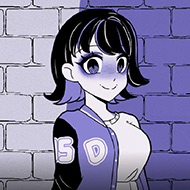
What happens when three separate girls fall in love with the same lonely stranger, and every single one of them decides that killing her is the only way to keep her forever? That is the entire premise Killer Trait builds its horror on, and once the fairy-tale opening ends, there is no gentle version of the answer. The game was originally released as It Gets So Lonely Here, a yandere yuri visual novel that later found its way onto hosting sites under different listing names, and the version covered here keeps every route, every death, and every line of the Witch’s mockery intact.
A Contract Written in a Dark Forest
The story opens on Rosette, a conservatory student so isolated by bullying and family neglect that she turns to an occult book looking for company. The summoning works, but not in the way she hoped. Instead of a friend, Rosette wakes up running through a pitch-black forest, chased by something she never sees clearly, until she reaches a fork in the road.
That fork is the entire game. Three paths lead to three different endings, and Killer Trait never pretends the choice is safe. Shore, village, or castle — each one hands Rosette to a different girl, and each of those girls loves her enough to make sure she can never leave.
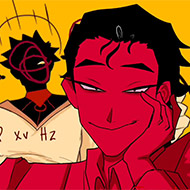
Holding the whole loop together is the Witch, an archly amused contract-maker who narrates Rosette’s decisions with the detachment of someone who has watched this exact story play out many times before. She is the one who struck the original bargain, and she is the only character who seems to understand that the forest resets.
Three Roads, Three Ways to Die in Killer Trait
Choosing the shore leads to the Mermaid, an isolated figure who sings sweetly and offers Rosette the ocean instead of the cruelty of dry land. Her ending is drowning, framed less as violence and more as a lover who cannot imagine letting go.
The village path belongs to the Gravedigger’s Daughter, a plague survivor whose tenderness comes from real grief. She buries Rosette alive, and the scene plays the act as an extension of care rather than cruelty, which is exactly why it unsettles as many players as it does.
The castle route introduces the Princess, a girl smothered by an isolation of her own, who offers Rosette servants, luxury, and a life of being adored — right up until the route’s cannibalism twist. None of the three love interests are given individual names beyond their archetypes, and that choice is deliberate: the writing is less interested in who these girls are than in what desperate love does to someone who has never been shown a healthier version of it.
The Vocabulary Behind the Horror
Yandere is the genre label that explains almost everything about how the pacing works. It describes a character, or in this case three of them, whose affection curdles into obsession and violence, and the entire game is built around watching that curdling happen from the receiving end.
The Witch’s contract is the mechanic that explains why Rosette keeps waking up at the start of the forest after every death. It is never spelled out in plain terms, only hinted at through the Witch’s asides, which is part of why players end up piecing the lore together in comment sections rather than from the text alone.
Foreshadowing dreams show up before each route, brief fragments that hint at the specific way that path’s love interest will end things. Players who replay specifically to catch these dreams on a second pass tend to notice details, like imagery of water before the shore route, that a first-time reader has no reason to register.
The true ending only opens up after Rosette has died on all three main routes. Reaching it means resisting the Witch directly and breaking the original contract, which flips the story from a loop of deaths into something closer to an actual escape.
Why the Loop Keeps Players Coming Back
On paper, a visual novel where the same forest resets after every death sounds like it should get repetitive fast. In practice, the full experience runs close to 50,000 words and clears in roughly two to three hours across all routes, which keeps the loop from overstaying its welcome. Steam listings for the underlying release show it holding a 96 percent positive rating across more than a thousand reviews, a number that is unusually high for a horror-romance visual novel with this small a scope.
Part of that reception comes from tone. The narrator’s voice is dry and a little cruel, which keeps scenes that could feel purely tragic from ever tipping into misery. Achievement hunters get a concrete reason to finish every branch too, since the Steam build ships with a dozen unlockable achievements tied to specific deaths and choices.
Completionists chase the true ending on principle; yuri readers come in for the specific dynamic of watching affection turn dangerous between two women rather than the more common gendered version of the trope; and players newer to visual novels tend to treat the short branch lengths as a low-commitment way to try the format without signing up for a forty-hour commitment.
What Killer Trait Gets Right, and Where It Wears Thin
The writing earns most of its praise for understanding something uncomfortable: that loneliness can make monstrous love look like the only love available. Players keep returning to that idea, less as a horror hook and more as the emotional core the horror is built on top of.
Where it wears thin is exactly where the archetypes stop being an asset. Because the Mermaid, the Gravedigger’s Daughter, and the Princess exist mostly as symbols of a type of obsessive affection rather than as individuals with names and full histories, some players finish all three routes wanting more specificity than the short branch lengths ever deliver. That is a deliberate trade-off for pacing, not an oversight, but it is the one criticism that comes up consistently even among people who otherwise rate the game highly.
The content warnings are also worth taking seriously rather than skimming past. Bullying, drowning, live burial, and cannibalism are all present, though never rendered as explicit gore — the horror lands through implication and tone rather than graphic imagery.
Questions Players Ask About Killer Trait
How many endings does Killer Trait actually have?
There are three individual bad endings, one for each route through the shore, the village, and the castle, plus a true ending that only unlocks after Rosette has died in all three. Reaching that final ending requires resisting the Witch directly rather than simply surviving a route, so it plays more like a fourth, separate branch than a bonus scene.
How long does it take to finish Killer Trait?
Most players clear the full game, including all three routes and the true ending, in roughly two to three hours. The text itself runs close to 50,000 words, which is short by visual novel standards but enough to give each route its own distinct atmosphere before it repeats.
Is Killer Trait more of a horror game or a romance?
Both, deliberately. It reads as a yandere yuri visual novel, meaning the romance is the horror: every love interest’s affection is genuine, and that genuineness is precisely what makes their willingness to kill Rosette so unsettling rather than cartoonish.
Killer Trait is not a long game, and it was never trying to be. What it does with its short runtime — the Witch’s dry commentary, the three drastically different deaths waiting at the end of the shore, village, and castle paths, and a true ending that has to be earned by surviving all of them — is why it keeps getting recommended in yandere and yuri circles years after its original release. Rosette’s forest resets as many times as it takes; whether you keep walking back into it is the only real choice the game leaves you.