Family Secrets 1: Empty Plate opens with a phone call, not a jump scare: Miko’s mother tells him she’ll be away for work for a few days, which means Miko is suddenly responsible for looking after his younger brother Jun by himself. Nothing about that setup announces itself as horror. That’s exactly the point — Family Secrets 1: Empty Plate spends its first stretch as an ordinary family situation before it starts turning into something considerably harder to sit with.
What Family Secrets 1: Empty Plate Actually Is
This is a short, first-person narrative horror game built around a single household and a single stretch of time: a few days where Miko is the only one looking after Jun. There’s no combat, no weapon collection, no upgrade tree, and no score-based progression anywhere in Family Secrets 1: Empty Plate — the entire design leans on movement, observation, and interaction instead. A full playthrough runs about 30 to 40 minutes, which keeps the story compact rather than padded out with filler.
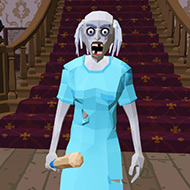
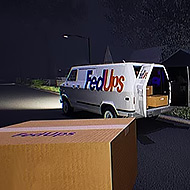
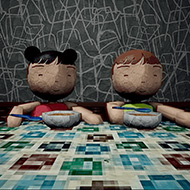
The visual style is low-poly and deliberately retro, built in Unity with assets modeled in Blender. That understated look keeps attention on the house itself and on Miko and Jun rather than on spectacle, which fits a story that’s more concerned with what happens inside four walls than with anything supernatural breaking through them.
Miko, Jun, and the Responsibility Neither of Them Asked For
Miko is the player’s viewpoint character throughout Family Secrets 1: Empty Plate, and Jun is the reason the entire premise exists — a younger sibling who now depends entirely on Miko while their mother is away. The mother herself only appears through that opening phone call, but her absence is what the rest of the game is built around; every room Miko checks and every moment he spends with Jun happens because of the gap she’s left behind.
What the game is ultimately about is less a monster and more a household under strain — fear, neglect, and what can happen inside a home when children are left to manage on their own. The horror in Family Secrets 1: Empty Plate comes from how plausible that situation feels before anything unusual starts happening at all.
How the Story Actually Moves Forward
Progress in Family Secrets 1: Empty Plate comes from exploring the rooms that are available, interacting with objects when the game allows it, and paying close attention to dialogue and environmental detail rather than searching for a puzzle to solve. Because the cast is just Miko and Jun and the entire stage is one house, small details carry more weight here than they would in a longer game with more rooms and more characters to track.
Controls stay minimal throughout: WASD handles movement, E is used to interact with objects or skip dialogue, F toggles a flashlight for the darker parts of the house, and ESC pauses or resumes the game. That short control list matches the scale of the experience — there’s nothing to manage beyond moving through the house, looking at what’s in front of you, and choosing when to act on it.
Because the game is built as a short playable story rather than a puzzle box, most of what determines pacing is how thoroughly a player chooses to explore each room before moving on. Rushing past a room tends to mean missing the environmental detail the narrative depends on to land.
Tone: Closer to Melancholic Than Purely Frightening
Family Secrets 1: Empty Plate is frequently described by players as sad rather than purely scary, with the emotional weight of the ending standing out more than any individual scare. The game deals with disturbing topics tied directly to what Miko and Jun go through while left on their own, and it favors emotional storytelling over traditional horror beats — there isn’t a steady stream of scripted jump scares here, and treating it like a conventional scare-a-minute horror game misreads what it’s actually doing.
Reception reflects that same reading: the game holds a strongly positive average rating from players, and a large share of the discussion around it centers on how the ending lands emotionally rather than on how frightening any specific scene was.
What New Players Get Wrong
Players expecting constant scares tend to treat early rooms as something to move through quickly, which works against a game built on noticing small details in an ordinary household before the situation shifts. Slower, more attentive exploration tends to serve the story better than rushing toward whatever comes next.
Is There Combat or a Score System?
No — Family Secrets 1: Empty Plate has no combat, no weapon collection, no upgrade tree, and no score-based progression. Everything is built around exploration, observation, and interaction within the house.
How Long Does a Full Playthrough Take?
Around 30 to 40 minutes, which keeps the experience tightly focused on Miko and Jun’s situation rather than stretched across a longer campaign.
Where the Game Actually Lives
Family Secrets 1: Empty Plate is a Windows title, distributed as a download through itch.io rather than as a browser-playable game — there’s no official in-browser version, so anything claiming otherwise isn’t coming from the actual release. It’s a paid release, not something bundled at no cost, and it’s made available in a wide range of languages by what reads as a small, independent development effort rather than a larger studio production. That scale shows in the focus of the final product: one house, two siblings, and a single stretch of days that the game trusts to carry the entire story without needing anything bigger around it.
Closing Thoughts on One Very Long Few Days
What makes Family Secrets 1: Empty Plate stick with players isn’t a monster reveal or a final chase — it’s the accumulation of small, plausible details about Miko trying to hold things together for Jun while their mother’s absence stretches on. The game never needs more than a house and two names to make that weight land. Anyone who finished Family Secrets 1: Empty Plate still thinking about Jun a day later already understands why this game gets recommended as quiet, character-driven horror rather than a scare-focused one.